

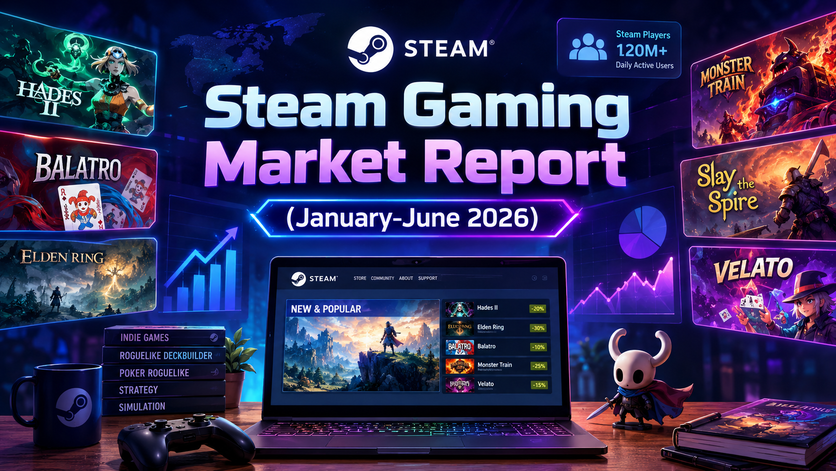
The first half of 2026 has reinforced one fact about the PC gaming industry: Steam remains the world’s most influential gaming platform.
Despite fierce competition from the Epic Games Store, Microsoft Store, and console ecosystems, Valve’s marketplace continues to attract millions of daily players while giving independent developers unprecedented opportunities to reach global audiences.
From January through June 2026, several trends became increasingly clear:
- Action games continue to dominate overall player numbers.
- RPGs remain among the highest-engagement genres.
- Strategy and deckbuilding games maintain exceptionally strong player retention.
- Simulation and survival games continue to expand.
- Roguelike card games are evolving beyond traditional deckbuilders into new hybrids, including poker-inspired mechanics and bluffing systems.
For players, this means more variety than ever before. For developers, it signals that innovation—not budget—is increasingly what determines success on Steam.
Table of Contents
- Steam Continues to Dominate PC Gaming in 2026
- The Biggest Gaming Trends on Steam (January–June 2026)
- Top 5 Most Popular Game Genres on Steam
- Why Indie Games Continue to Win
- The Rise of Roguelike Deckbuilders
- Poker Roguelikes: Steam’s Emerging Card Game Trend
- Steam Discovery Has Changed the Way Games Succeed
- What Developers Can Learn
- Looking Ahead: Steam Market Predictions for July–December 2026
Steam Continues to Dominate PC Gaming in 2026
More than twenty years after its launch, Steam is still the center of the PC gaming ecosystem.
Valve has gradually shifted Steam from a digital storefront into a complete gaming platform by combining:
- Community features
- Steam Workshop
- User reviews
- Achievements
- Steam Deck support
- Cloud saves
- Personalized recommendations
These systems create an ecosystem that is difficult for competitors to replicate.
Another key advantage is Steam’s recommendation algorithm. Rather than relying solely on publisher marketing, Steam surfaces games based on player behavior, wishlists, review quality, and engagement, giving indie studios a genuine opportunity to succeed.
This has helped create an environment where small teams can produce some of the year’s biggest hits.
The Biggest Gaming Trends on Steam (January–June 2026)
Several major trends shaped Steam during the first six months of the year.
Players increasingly prefer games they can enjoy for hundreds of hours instead of completing once.
1. Replayability Is More Valuable Than Ever
Genres benefiting most include:
- Roguelikes
- Survival
- Deckbuilders
- Simulation
- Sandbox games
Replayability has become one of the strongest indicators of long-term commercial success.
2. Indie Games Continue to Challenge AAA Studios
One of Steam’s greatest strengths is that success is no longer determined purely by development budget.
Games developed by small independent studios continue to outperform expectations through:
- Creative mechanics
- Strong community engagement
- Frequent updates
- Lower pricing
- Early Access development
Titles like Balatro demonstrated how a single innovative gameplay idea can outperform many blockbuster releases.
3. Steam Deck Keeps Expanding the Audience
Steam Deck compatibility is no longer considered an optional feature.
Games designed with:
- controller support
- readable UI
- shorter gameplay sessions
often receive additional visibility and recommendation boosts from Steam users.
Deckbuilders and roguelikes benefit particularly well because they naturally fit portable gaming sessions.
Top 5 Most Popular Game Genres on Steam
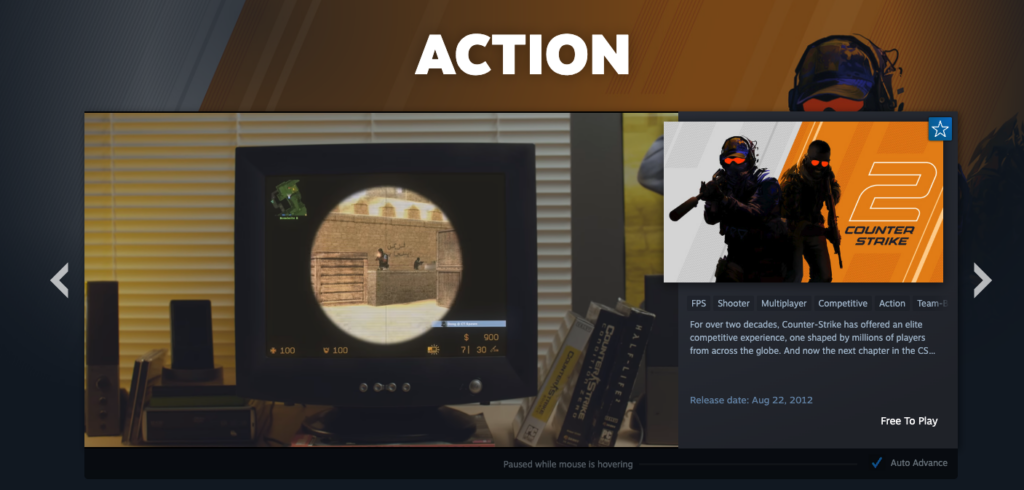
1. Action Games
Action remains Steam’s largest genre.
Popular examples include:
- Counter-Strike 2
- Dead Cells
- Black Myth: Wukong
- Hades II
Players continue to favor games that combine responsive combat with high replay value.
2. RPG
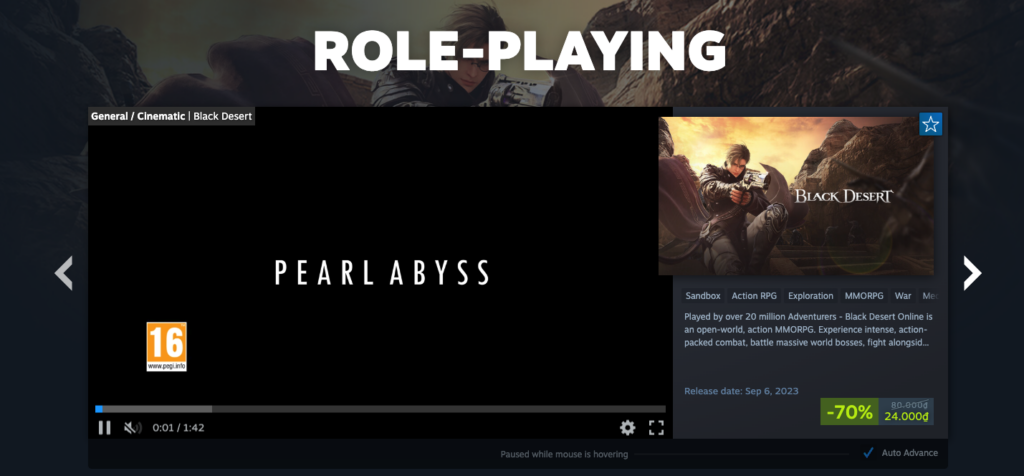
Role-playing games continue to dominate player engagement.
Major strengths include:
- long progression systems
- exploration
- character customization
- narrative depth
Large RPGs regularly become some of Steam’s most-played releases.
3. Strategy
Strategy games have quietly become one of Steam’s healthiest categories.
This includes:
- RTS
- Turn-based strategy
- Auto battlers
- Roguelike deckbuilder games
Unlike action games, strategy titles often enjoy exceptionally long player lifecycles because of their nearly limitless build diversity.
4. Survival
Open-world survival games continue attracting huge communities through crafting, multiplayer, and base building.
Games such as Rust and Valheim remain benchmarks for long-term engagement.
5. Simulation
Simulation has experienced remarkable growth.
From trucking simulators to supermarket management games, players increasingly enjoy slower-paced experiences that reward optimization rather than reflexes.
Why Indie Games Continue to Win
One noticeable trend throughout 2026 is the growing influence of independent developers.
Unlike traditional AAA publishers, indie studios can:
- experiment with unusual mechanics
- respond quickly to community feedback
- release frequent updates
- build dedicated communities
Steam’s review system amplifies this advantage.
Positive user reviews often generate more sales than expensive advertising campaigns.
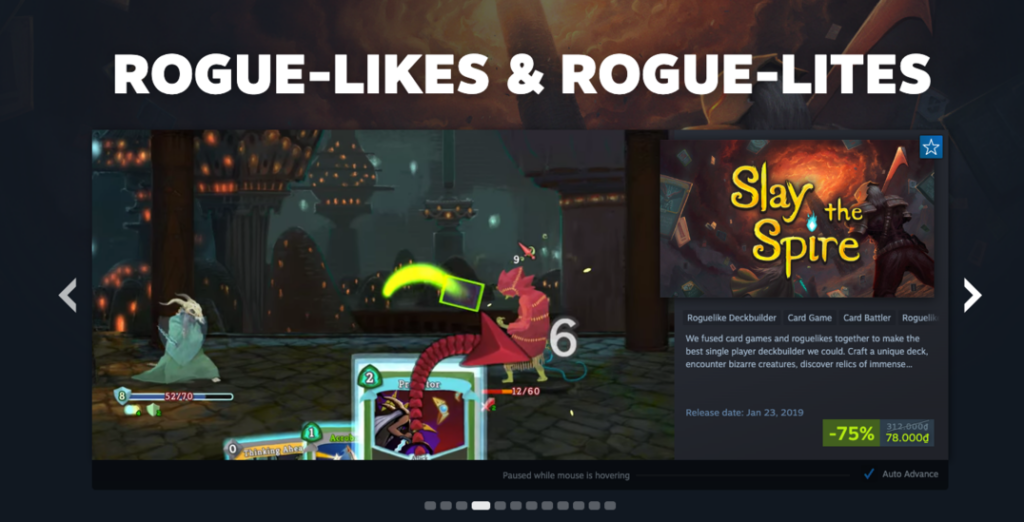
The Rise of Roguelike Deckbuilders
Few genres have expanded faster than the roguelike deckbuilder.
The success of Slay the Spire created an entirely new design philosophy.
Rather than relying on endless content, these games focus on:
- procedural runs
- card synergies
- strategic decision making
- replayability
This design approach allows relatively small development teams to create games with hundreds of hours of content.
Notable examples include:
- Slay the Spire
- Monster Train
- Wildfrost
- Cobalt Core
- Astrea
The genre has become one of Steam’s most dependable indie success stories.
Poker Roguelikes Are Creating a New Subgenre
Perhaps the most interesting trend of 2026 is the rapid emergence of poker roguelike games.
Instead of treating poker simply as gambling, developers are using familiar card mechanics as strategic building blocks for entirely new gameplay systems.
The success of Balatro introduced millions of players to the idea that poker hands could become the foundation of a modern roguelike.
Since then, developers have continued experimenting with increasingly creative mechanics.
The Next Evolution: Poker Bluffing Roguelites
The newest innovation is the poker bluffing roguelite.
Unlike traditional poker-inspired games that reward only mathematical optimization, these titles introduce:
- deception
- hidden information
- mind games
- risk management
- psychological strategy
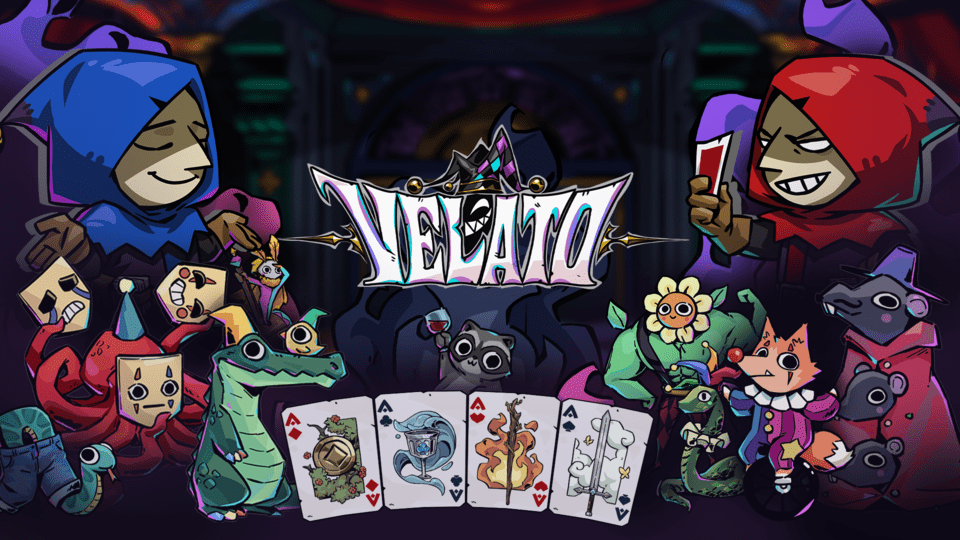
One of the most notable upcoming examples is Velato, which shifts the focus from simply creating high-value poker hands to manipulating what opponents believe.
Instead of asking:
“How can I maximize my score?”
Players are encouraged to ask:
“Can I convince my opponent I’m stronger than I really am?”
That subtle design shift introduces an entirely different layer of strategic thinking, making bluffing a core gameplay mechanic rather than a thematic element.
If this approach proves successful, it could inspire a new wave of hybrid deckbuilders that combine probability, psychology, and roguelike progression.
Velato Steam page: https://store.steampowered.com/app/4542750/VELATO/
Steam Discovery Has Changed the Way Games Succeed
Steam’s recommendation algorithm increasingly rewards games that demonstrate healthy engagement rather than simply large marketing budgets.
Important ranking factors include:
- Wishlist growth
- Positive review ratio
- Session length
- Community activity
- Regular updates
- Player retention
This is why many indie games continue climbing Steam’s charts months after launch.
What Developers Can Learn
The first half of 2026 offers several clear lessons for game developers.
Build Replayability
Players increasingly value games they can return to repeatedly.
Design Around Community
Strong Discord communities, Steam discussions, and developer transparency remain powerful growth drivers.
Innovate Within Familiar Systems
Players enjoy recognizable mechanics—but they also appreciate fresh ideas.
Poker, deckbuilding, and roguelikes demonstrate that combining familiar concepts often leads to successful innovation.
Looking Ahead: Steam Market Predictions (July–December 2026)
The second half of 2026 is likely to accelerate several trends already visible today.
1. Roguelikes Will Continue to Grow
Replayability remains one of the strongest value propositions for players, especially as game prices continue to rise. Expect more hybrid roguelikes that blend genres such as city builders, extraction shooters, deckbuilders, and tactical RPGs.
2. Card Games Will Become More Experimental
After the success of poker-inspired mechanics, developers are increasingly willing to move beyond traditional collectible card game formulas. New releases are likely to combine card systems with social deduction, resource management, or real-time combat.
3. Psychological Gameplay Will Gain Attention
Mechanics based on bluffing, hidden information, and imperfect knowledge are becoming more common. This creates opportunities for poker bluffing roguelite games to stand out in a crowded market by offering a different kind of strategic depth.
4. Steam Deck Optimization Will Become Standard
As handheld PC gaming continues to expand, developers who prioritize controller support, scalable interfaces, and short, satisfying gameplay sessions will be better positioned for success.
5. Community-Driven Development Will Matter More Than Ever
Players increasingly expect frequent updates, transparent roadmaps, and active communication. Games that maintain strong engagement after launch are more likely to benefit from Steam’s discovery systems and long-term visibility.
Steam’s Biggest Challenges in the Second Half of 2026
Although Steam continues to dominate PC gaming, the platform is becoming more competitive than ever. Every week, hundreds of new games are released, making visibility one of the biggest challenges for developers.
According to SteamDB and industry tracking sites, thousands of new titles are added to Steam every year. While this creates incredible variety for players, it also means launching a successful game requires much more than simply publishing it.
Developers now compete on three fronts:
- Quality gameplay
- Community engagement
- Steam’s recommendation algorithm
This trend is expected to continue throughout the second half of 2026.
Trend #1: Roguelike Games Will Continue Their Rapid Growth
If there is one genre that shows no signs of slowing down, it is roguelikes.
Several factors explain why.
Players Want Endless Replayability
Modern gamers are increasingly selective about how they spend both their money and their time.
Instead of finishing a game once and moving on, many players prefer titles that offer hundreds of hours of meaningful replayability.
Roguelikes naturally satisfy this demand through:
- Procedural generation
- Randomized upgrades
- Multiple character builds
- Unlockable content
- Dynamic encounters
Even after dozens of hours, each run can feel different.
This replay value makes roguelikes especially attractive during periods when players are buying fewer games overall.
Hybrid Roguelikes Will Become the New Standard
The biggest innovation in recent years hasn’t been creating entirely new genres—it has been combining existing ones.
Examples include:
- Roguelike deckbuilder
- Roguelike city builder
- Roguelike auto battler
- Roguelike shooter
- Roguelike survival
- Roguelike poker games
Hybrid designs allow developers to attract audiences from multiple genres while creating gameplay that feels fresh.
Expect more studios to experiment with these combinations throughout late 2026.
Trend #2: Deckbuilders Are Becoming More Strategic
After years of focusing primarily on damage optimization, many deckbuilders are evolving toward more complex decision-making.
Earlier titles emphasized:
- Bigger numbers
- More powerful combos
- Infinite scaling
Newer games increasingly emphasize:
- Positioning
- Resource management
- Risk assessment
- Hidden information
- Tactical timing
This shift creates deeper gameplay without necessarily making games more difficult.
Trend #3: Poker Mechanics Are Evolving Beyond Scoring
One of the biggest surprises of 2026 is how quickly poker mechanics have expanded beyond traditional casino gameplay.
Balatro Changed Player Expectations
Before Balatro, poker-inspired games occupied a relatively small niche.
Its success demonstrated that familiar poker hands could become the foundation for deep strategic gameplay rather than simple gambling simulations.
Developers quickly recognized that poker offers:
- Clear rules
- Easy accessibility
- High strategic depth
- Endless opportunities for creative modifiers
As a result, more indie studios are exploring poker-inspired systems.
Bluffing May Become the Next Major Innovation
The next step is no longer building stronger poker hands.
It is building better psychological systems.
This is where the emerging poker bluffing roguelite concept becomes particularly interesting.
Instead of rewarding only mathematical optimization, these games challenge players to manipulate uncertainty.
Potential mechanics include:
- Hidden cards
- Fake information
- Delayed reveals
- Opponent prediction
- Risk manipulation
- Psychological pressure
These systems create memorable stories because victory depends not only on the cards you hold, but also on how your opponent interprets them.
Why Velato Represents an Emerging Trend
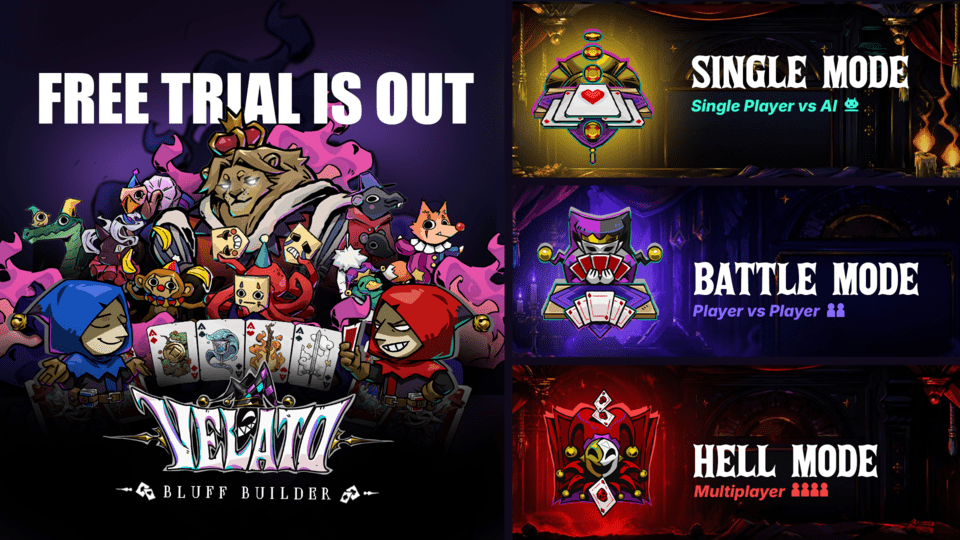
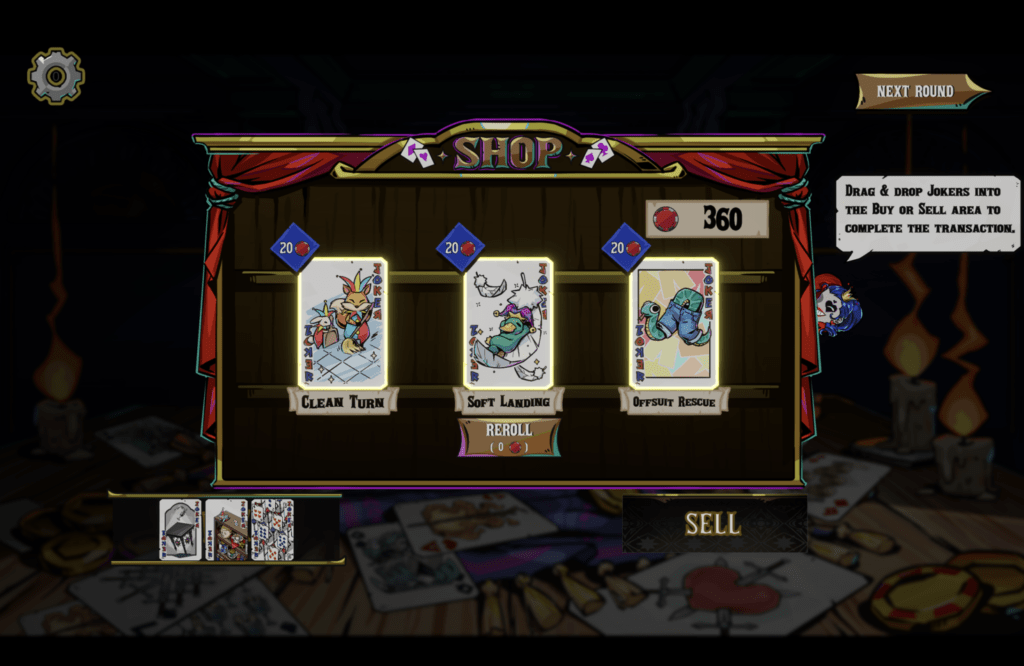
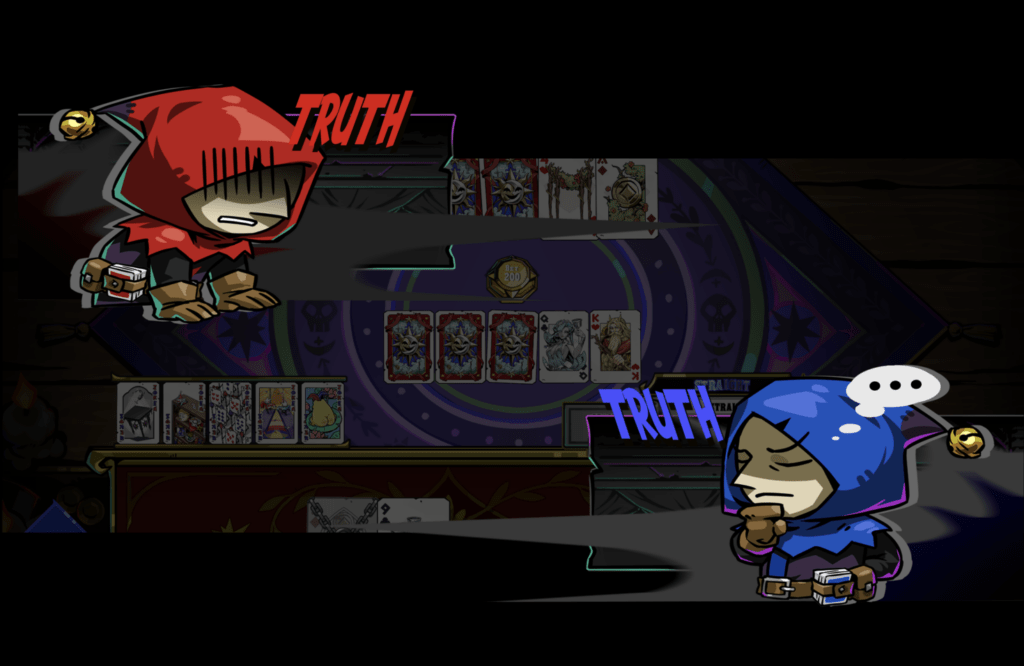
Among upcoming indie releases, Velato is one of the clearest examples of this design philosophy.
Rather than asking players to maximize a score multiplier, the game explores the strategic tension between truth and deception.
Its combination of:
- Poker hands
- Roguelike progression
- Deckbuilding
- Bluffing mechanics
- Psychological strategy
illustrates where this subgenre may be heading.
If players respond positively, other developers are likely to experiment with similar mechanics in the coming years.
Steam’s Recommendation Algorithm Will Favor Long-Term Engagement
Launching a game is only the beginning.
Steam increasingly rewards titles that continue attracting players long after release.
Key indicators include:
- Wishlist conversions
- Daily active players
- Review score
- Update frequency
- Community discussions
- Returning player rate
Games that maintain healthy engagement often receive additional visibility through:
- Discovery Queue
- Similar Games
- Featured recommendations
- Seasonal sales
- Personalized homepages
This creates a powerful feedback loop where successful community management becomes just as important as gameplay quality.
What This Means for Indie Developers
The second half of 2026 presents both opportunities and challenges.
Opportunities
Lower Development Costs
Modern engines like Unreal Engine 5, Unity, and Godot allow small teams to produce games that compete visually with much larger studios.
Better Community Access
Developers can now build audiences through:
- Steam Next Fest
- Discord
- YouTube creators
- Twitch streamers
Word-of-mouth marketing has become one of the strongest growth channels for indie games.
More Room for Innovation
Steam players consistently reward originality.
Games introducing new mechanics often outperform technically superior titles that feel overly familiar.
Risks Facing New Releases
The market is also becoming increasingly crowded.
Common reasons promising games fail include:
- Weak Steam capsule art
- Poor store page optimization
- Lack of demo
- Limited community engagement
- Generic gameplay
- Unclear genre positioning
Even high-quality games can struggle if players cannot immediately understand what makes them unique.
Advice for Developers Launching on Steam in Late 2026
Based on the trends observed during the first half of the year, several recommendations stand out.
Build Your Wishlist Early
Steam wishlists remain one of the strongest predictors of launch performance.
Developers should begin marketing months before release.
Participate in Steam Next Fest
Playable demos continue generating valuable feedback while dramatically increasing visibility.
Focus on a Strong Gameplay Hook
Players decide within seconds whether a Steam page is interesting.
Clearly communicate what makes your game different.
Encourage Community Feedback
Successful indie games rarely remain static.
Regular updates and transparent communication help maintain momentum long after launch.
Final Market Outlook
Looking ahead, Steam is expected to remain the dominant platform for PC gaming throughout the remainder of 2026.
Several trends appear especially likely to shape the market:
- Roguelike deckbuilders will continue expanding through hybrid gameplay systems.
- Poker roguelike games will move beyond score-chasing into more strategic and psychological experiences.
- Poker bluffing roguelite mechanics could emerge as one of the genre’s most exciting innovations.
- Indie developers will continue challenging AAA studios through creativity rather than production budgets.
- Steam’s discovery ecosystem will increasingly reward games with strong replayability, active communities, and consistent post-launch support.
For players, this means a broader selection of innovative titles than ever before. For developers, the opportunity is clear: success on Steam in late 2026 will depend less on marketing budgets and more on delivering memorable gameplay, fostering engaged communities, and offering fresh ideas that stand out in an increasingly competitive marketplace.
References
- Steam – https://store.steampowered.com/
- SteamDB – https://steamdb.info/
- Steam Charts – https://steamcharts.com/
- GameDiscoverCo – https://newsletter.gamediscover.co/
- Newzoo – https://newzoo.com/
- PC Gamer – https://www.pcgamer.com/
- GamesIndustry.biz – https://www.gamesindustry.biz/
- Rock Paper Shotgun – https://www.rockpapershotgun.com/
Related Contents:
- What Is a Roguelike Card Game? https://blog.velato.click/what-is-a-roguelike-card-game/
- What Is an Indie Game? https://blog.velato.click/what-is-an-indie-game/
- 15 Best Roguelike Card Games for PC in 2026: https://blog.velato.click/15-best-roguelike-card-games-for-pc-in-2026/
- Top 10 Underrated Roguelike Games You Should Play: https://blog.velato.click/top-10-underrated-roguelike-games-in-2026/
- Games Like Balatro: 12 Amazing Alternatives: https://blog.velato.click/games-like-balatro-12-amazing-alternatives-to-try-in-2026/
- Velato Roguelike Review: https://blog.velato.click/velato-the-first-actual-poker-bluffing-roguelike/
- How to Set Up a Steam Store Page? https://blog.velato.click/how-to-set-up-a-store-page-on-steam/